
Dayton Resident Lookup Records
A name search has no single master result in Dayton. Each official source answers a narrower question. The Montgomery County Auditor can return a parcel owner and the correspondence address shown for tax purposes. The Recorder can show whether a named party appears on a recorded instrument. Ohio voter search can confirm a named voter record. Courts, vital custodians, probate, and Ohio affiliation tools each keep separate records. Start with the source that fits the fact you already know, then compare a stable detail from another record.
| Record | What it can confirm | Official channel | Access and limit |
|---|---|---|---|
| Parcel or tax record | Tax owner, site and mailing fields, transfer clue | MCRealEstate and the Treasurer search | Owner or mail-to data is not proof of residence. |
| Recorded instrument | Named party, recording event and legal-description trail | Recorder RISS, Recorder terminal, or archive | A recorded party is not necessarily a current resident. |
| Voter registration | Named voter’s registration, precinct and polling-place information | Ohio Voter Search | Requires first name, last name and Montgomery County; it is not a household result. |
| Public court docket | Case, party role, filed date and recorded events | Montgomery PRO or Dayton Municipal Court | Remote material can be incomplete or redacted; certification is at the clerk. |
| Vital or probate record | Historical life event, marriage, estate or named heir lead | PHDMC Vital Statistics, Probate, archive, or historical index | An index result is not a certified copy. |
| Public affiliation record | Entity filing, statutory-agent role, or credential detail | Ohio business search or Ohio eLicense | An agent or city field does not prove a personal residence. |
For a current address question, begin with the parcel and preserve its identifier. For a court question, begin with the court and a plausible date. For a historic death or family-history question, use the historical index or obituary citation before requesting a copy. A resident lookup gains strength when its pieces agree on a date, a document number, a parcel, or a documented family relationship.
Dayton Court Dockets by Name
Court names and divisions matter. Dayton Municipal Court offers paths by case number, date, defendant, plaintiff, and attorney. Its defendant form accepts company name, last name, first name, and an exact-match choice. Montgomery County’s Public Records Online system covers Traffic, Criminal, and Civil municipal matters; Common Pleas criminal and civil matters; Domestic Relations; and Second District appellate matters. Probate is a separate custodian. A federal case belongs in PACER, not PRO. Use the court, case type, and likely date before treating a name match as relevant.
The PRO service limits a search to the first 1,000 results and says it is not certified proof. Public docket material may appear later than filing, may be redacted, or may not be online. It deliberately suppresses civil protection-order information identified in its notice. A blank web result therefore cannot rule out a protected proceeding. For a case that matters, make the clerk request with the case number and ask whether a plain or certified copy is available.
The Dayton Municipal Court case-number search shows the kind of focused path that is most useful once a case number is known.
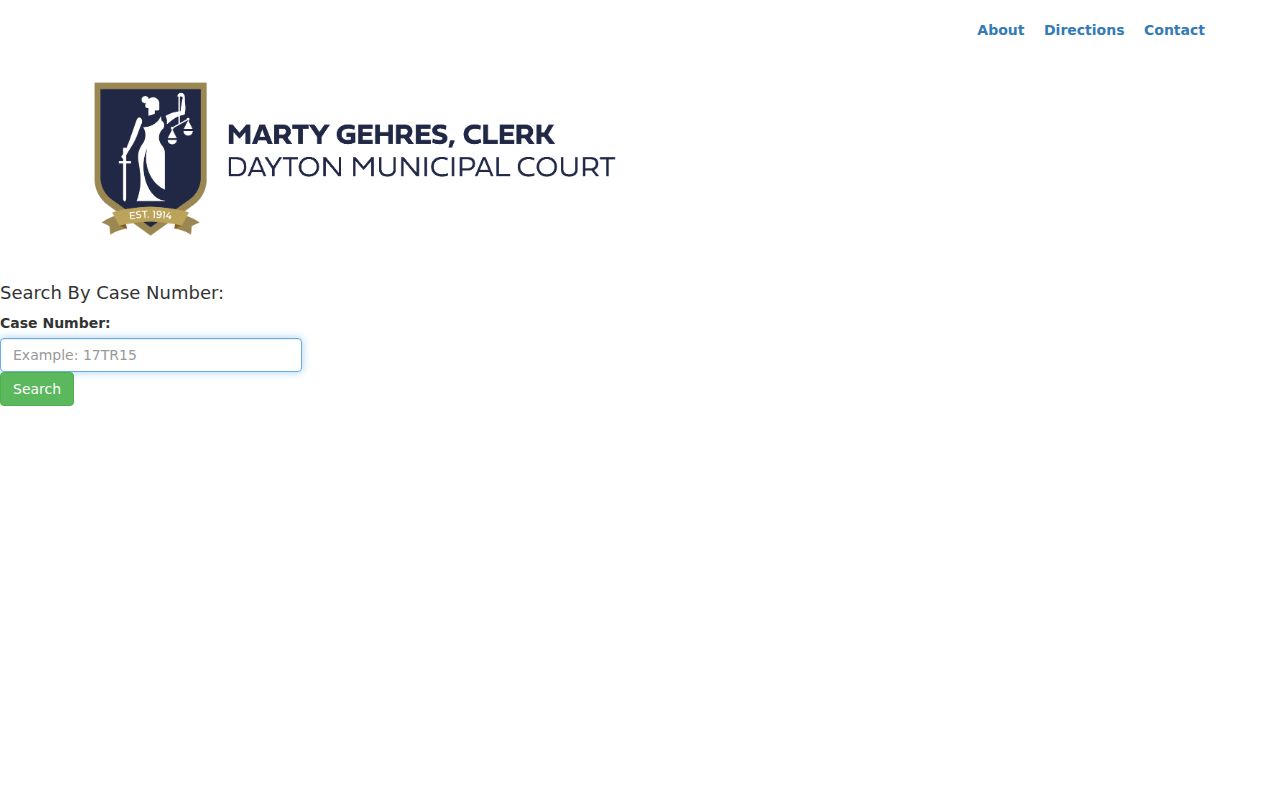
Capture the court, division, search date, and case number before comparing a docket party with an independent record.
Note: A court webpage can identify a docket trail, but the clerk controls official copies and any restrictions on access.
Dayton Resident Lookup Verification
Same-name errors are common. Verify a Dayton resident with two independent, stable factors rather than a surname and city alone. Strong pairings include parcel ID plus site address, a recorded document number, a case number and division, a documented spouse or relative, or an occupation paired with a historical address. Keep the spelling used by each custodian and note the date searched. A tax mailing address can belong to a correspondent rather than the person at the parcel, so it is useful only when the source labels it accurately.
- Search the Auditor by address, owner, or parcel as appropriate. Save the parcel ID, situs address, owner name, tax year, and any sale or deed reference.
- Try the person’s full name and a reasonable variant in Ohio Voter Search. Select Montgomery County and use the returned civic information only as a name-level confirmation.
- Search the court channel that fits the place and date. Record the division and case number, then compare that record with the parcel or another independent factor.
- For an historic event, test the appropriate vital or obituary index. Request a certified record only from the custodian that issues it, and keep the order result with the identifier used.
Older papers call for the same discipline. A directory can show a business location instead of a home, and a court caption can name a company or another person with the same surname. The safest conclusion is usually narrow: the source named this party at this date. It does not automatically establish where that person is now.
- Docket
- A court’s running list of filings, hearings, orders, and case events. It is not always the full case file.
- Index and image
- An index points to a record through names, dates, or numbers. An image is a view of a document, when the custodian makes one available.
- Certified copy
- A copy issued or authenticated by the office that holds the official record. A web result does not carry that status.
Dayton Resident Lookup: Site or Mail
A parcel can carry more than one address, and the labels matter. Montgomery County’s Treasurer example for parcel A01 00107 0001 shows a site location at 696 Martindale Road while its mailing information identifies Five Rivers MetroParks at 409 E. Monument Avenue. That example is a useful reminder for a Dayton resident lookup: tax correspondence may identify an organization, owner, or contact without naming the person at the physical site.
Read the Auditor and Treasurer fields as the office labels them. Preserve the situs address, parcel ID, owner name, mailing field, tax year, and transfer reference separately. Then seek a second source that fits the question, such as a recorded document, a named voter result, or a historical directory entry. This comparison prevents an address trail from turning a mail-to field into a claim about current residence.
Dayton Vital and Probate Checks
Vital and court records are not interchangeable. Public Health - Dayton & Montgomery County Office of Vital Statistics handles the local birth and death route, while the Ohio Department of Health is the state channel. Montgomery County Probate Court handles marriage licenses and certified local marriage records. Divorce decrees are court records through the Clerk. The County archive adds historical context: it holds county and city birth/death records for 1867-1908, marriage records for 1803-1959, a marriage index through 1961, and divorce material for 1876-1949.
For a historical death question, use the Ohio History Connection death index only within its stated spans, 1913-1944 and 1954-1970. It is an index to certificates, not the certificate itself. The Dayton Obituary and Genealogy Database is also a citation index. Give the Dayton Room the complete citation when requesting a copy, and its documented limit is three requests at a time.
The Montgomery County marriage-license page separates the local Probate route from birth and death service.
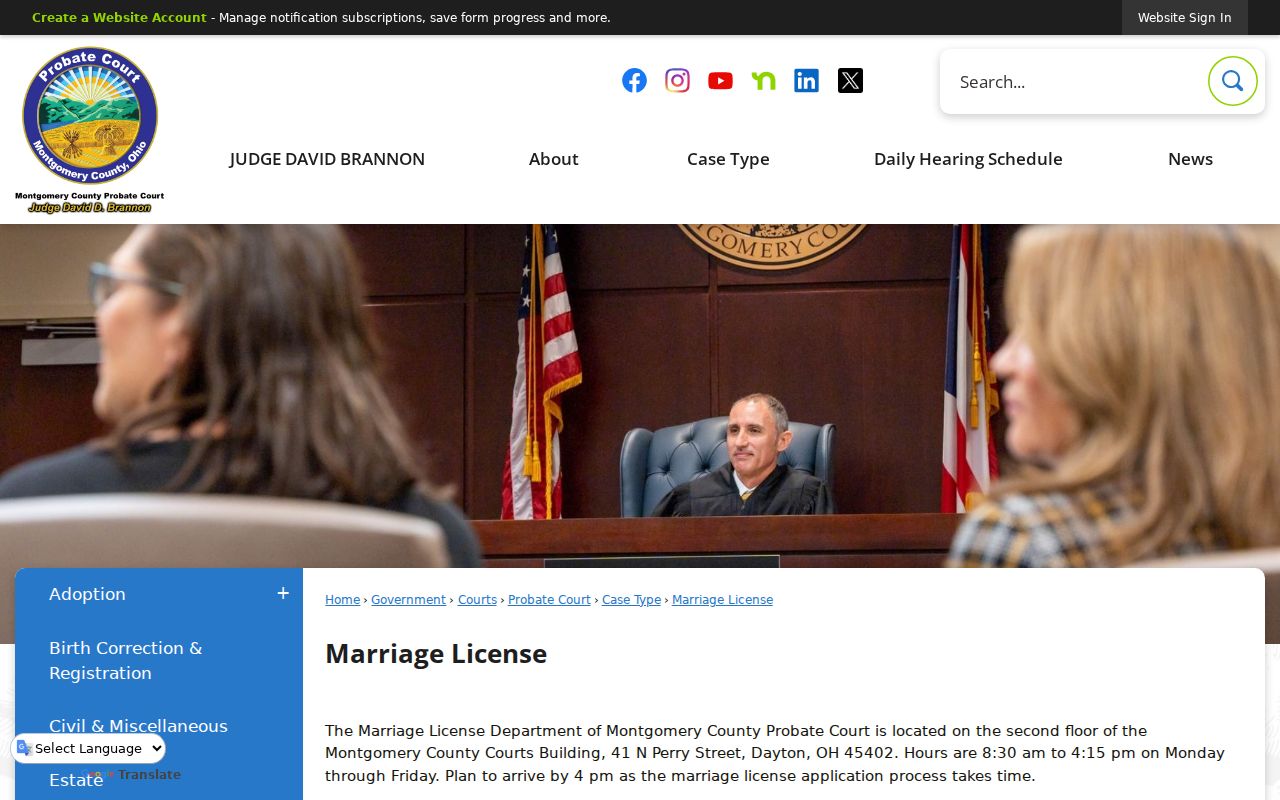
A marriage license application is not the same thing as a certified marriage record, so ask Probate for the record type needed.
The Montgomery County Probate Court is also the estate and guardianship custodian.
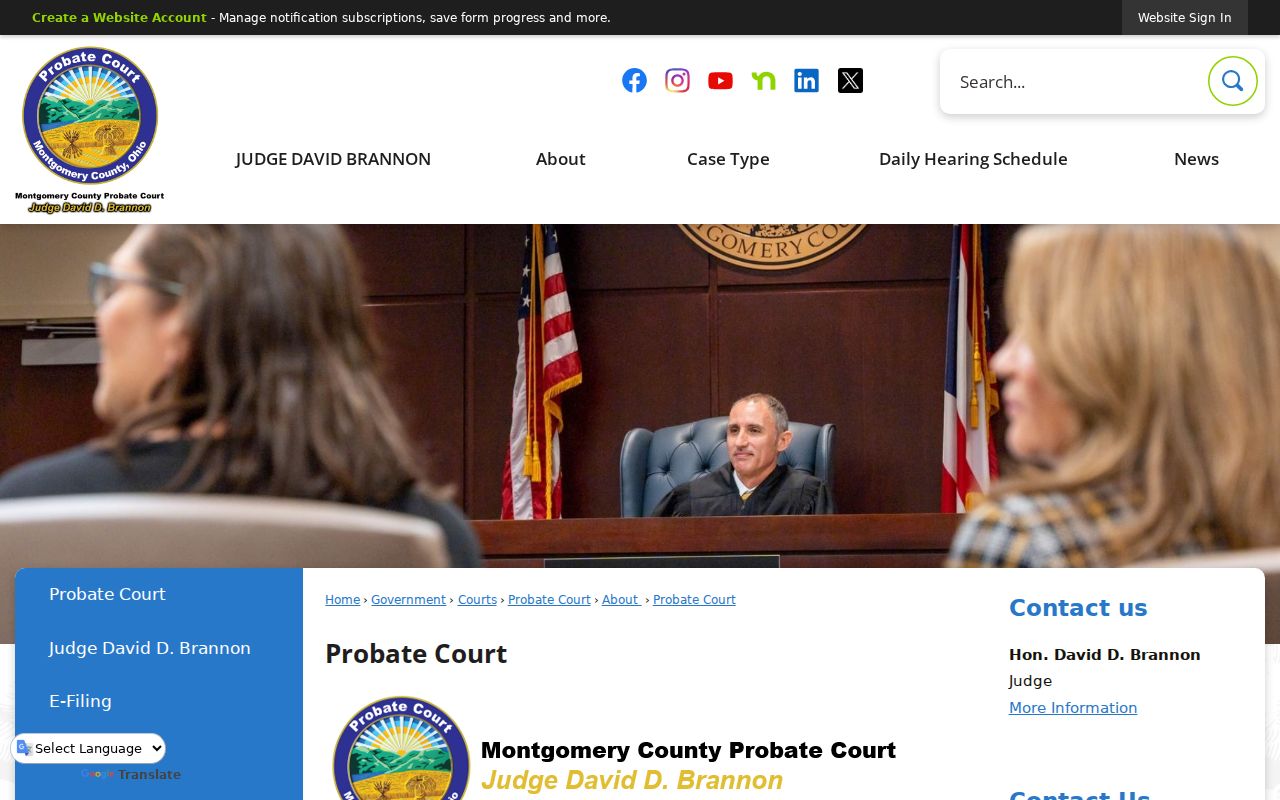
For an heir trail, begin with a death-index or obituary lead, then locate the estate before comparing any certificate of transfer or deed.
Dayton Resident Lookup Through Voter Records
Ohio Voter Search requires first name, last name, and county. Choose Montgomery for Dayton-related records. The service can return registration, precinct, and polling-place information, and may offer a dynamic street-name choice to narrow a result. Try a derivative first name, former surname, or former county address when the official guidance fits the search. The tool is a named-person confirmation route, not a way to browse every voter on a street or identify everyone at an address.
| First name | Required text field; derivative forms may help locate a variant. |
|---|---|
| Last name | Required text field; a former surname can be useful for historical work. |
| County | Required selection; use Montgomery for the local search. |
| Street name | Conditional dynamic choice when the service offers it to narrow results. |
Registration data has statutory exclusions. It does not disclose ballot selections, and protected addresses are not a loophole to work around. Historical election material at the County archive is a different source and does not turn the modern interface into a permanent address history.
Dayton Resident Lookup and Public Affiliations
Ohio’s Business Search can provide an entity name, charter number, filing history or status, and statutory-agent information. The Secretary of State does not maintain a broad owner or officer directory. An agent’s Ohio street address is part of the filing role, not evidence that the agent owns an entity or lives at that address. If an entity appears in a parcel trail, compare the filing date and named role with the Recorder party and Auditor record.
Ohio eLicense recommends a last name, first initial, and board, followed by license number or more-detail review. Public information can include credential status, board, type and dates, city/state, and board action. That is a public association record, not proof of a person’s current address. Ohio UCC notices are likewise filing notices, not proof of ownership or debt validity.
Resident Lookup Protections in Dayton
The Ohio Public Records Act provides a request route for records held by public offices, subject to exemptions and redactions. It does not erase the separate rules of each custodian. Court records can be sealed or restricted. Vital records carry protected material. Voter data excludes protected address and confidential fields. BMV personal information has its own limits. A public record should never be treated as conclusive identity proof.
Ohio’s Safe at Home program provides a substitute address for eligible people who fear for safety. Its information is excluded from public voter-database access where applicable. A missing result may be deliberate. Do not seek around sealed, protected, adoption-related, or confidential records. To correct an inaccurate government record, use the process of the office that keeps it. A private-directory opt-out does not change a deed, tax roll, or court record.
Lawful use. Use a Dayton resident lookup for lawful personal research, family history, reconnection, estate questions, or civic curiosity. Never use records to stalk, harass, intimidate, or harm another person.
Dayton Resident Lookup Fallbacks
When a portal does not return a match, use the custodian that holds the record instead of guessing. For a Recorder index or image gap, call 937-225-4275 or use the fifth-floor public terminal and historical books or microfilm. For historic deed, tax, or probate material, contact the County Records Center & Archives at 117 S. Main Street with the full name, record type, and date range. The research room retrieves noncirculating material. For directory, newspaper, or obituary questions, use the Dayton Room with a volume or citation.
For a certified birth or death copy, use the PHDMC application with the event county and date, then follow its current signed-request and fee instructions. For a court file or certification, work through the Clerk. A focused records request under Ohio law should describe an existing record, date range, and desired medium rather than ask an office to create a new analysis. These access channels keep a resident lookup tied to the office that can actually verify the result.
Note: A clear request for an existing record is more useful than a broad request for every item that might mention a name.