
Dayton Previous Residents by Record Era
A backward address trail changes with the age of the property. The County archive, Recorder, Dayton Room, and period maps all hold different parts of the story. Start with the source nearest the date in question, then move to the earlier channel when the web result ends. The table separates what each record can establish from the much broader question of who may have been connected to an address.
| Dayton source | Local date span | Where held | What it can show |
|---|---|---|---|
| Original-owner tract record | 1801-30 | County historical record route | An earliest land-owner lead. |
| Deed and tract indexes | Physical deed indexes from 1805; tract index 1805-1986 | Recorder and Records Center & Archives | Recorded parties and legal-description sequence. |
| Tax duplicates | 1803-1983 | Records Center & Archives | Annual tax-owner and value context. |
| Directories and criss-cross volumes | City directories 1850 to current reported; address detail from 1914 | Dayton Room | A listed person or business at a dated address. |
| Released federal census | Released on a 72-year cycle | Library and federal research channels | A household on the census date. |
| Historic imagery and maps | County imagery 1938+; Dayton Room maps reach earlier | Engineer GIS and Dayton Room resources | Building, street, and geography context. |
The Montgomery County historical records guide identifies the dated archive series behind the older rows.
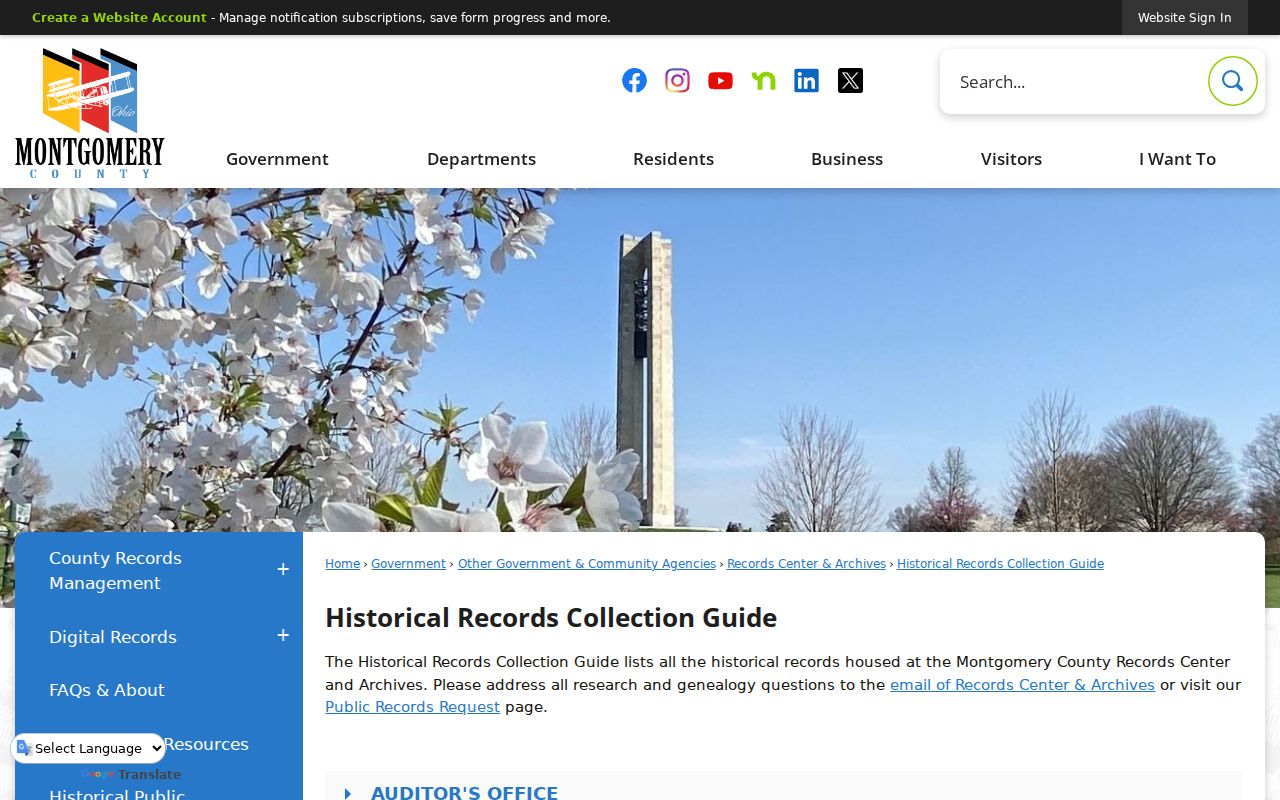
The detailed guide and summary archive page give different ending ranges for deed records, so call the Records Center for the exact volume needed. That is more accurate than treating either date range as a universal cutoff.
Dayton's Era-by-Era Address Record Trail
For an early Dayton property, the original-owner tract record can supply the first lead. Deed records and indexes begin in 1805, while tax duplicates begin in 1803. The city-directory shelf is reported from 1850, but address information is reported from 1914. County imagery begins in 1938, and released census records arrive on the 72-year schedule. This layered chronology explains why one address may require several formats instead of one continuous search screen.
A tax duplicate can flag a possible change in a parcel's improvement value. It is useful as a date clue, not proof that a structure was built, changed, or occupied at that time. A permit, project file, newspaper item, or map may add context, yet none replaces the recorded conveyance when ownership is the question.
Note: Keep the source date beside every name because an address trail is only as reliable as its time match.
Trace Dayton Previous Residents Through Deeds
Begin the ownership side with the parcel rather than a person name. The Montgomery County Auditor's property search can return a site address, parcel ID, owner names, mailing address when displayed, values, and transfer clues. Preserve the parcel identifier and legal description before opening the Recorder's index. A mailing address is correspondence information, not proof that a person lived at the parcel. The Recorder's RISS system permits guest searching after acceptance of its legal disclaimer, but physical index and microfilm holdings remain part of the trail.
- Search the address in MCRealEstate and write down the parcel ID, site address, legal description, owner names, and transfer reference.
- Find the most recent recorded deed in Recorder RISS and note the instrument number, recording date, parties, and legal-description wording.
- Use the seller from that deed as a grantee search to locate the earlier acquisition, then compare the legal description before treating it as the same parcel.
- Repeat the party and tract-index work backward, making an ownership timeline instead of relying on a single name match.
- When an older instrument is not available online, use the Recorder's fifth-floor indexes or request staff-retrieved material from the archive with a name, record type, and date range.
- Grantor and grantee
- The grantor is the party conveying an interest in a recorded instrument. The grantee is the party receiving it.
- Chain of title
- A dated sequence of recorded instruments used to trace an interest in the same parcel backward.
- Legal description
- The recorded lot, tract, or other land identifier. It is often more stable than a street number in older research.
- Tax duplicate
- An annual county tax record that can add owner and value context but does not replace the deed record.
Recorder public terminals let a visitor use the Recorder, Auditor, and Treasurer systems together. That makes it easier to compare the parcel identifier, the recorded instrument, and the tax-year context before adding another link to the chain.
Dayton's Abstract Book City Record Shortcut
For an urban lot, the Recorder's Home & Property Research Guide points researchers to GIS Documents and Abstract Book City. Select the abstract book and lot range, then read the seller, buyer, deed book, mortgage book, and page references. The guide's Dayton Abstract Book 11 example spans lots 155-326. This route can connect a lot to the next recorded instrument faster than a name-only chain, especially when an old street number has changed.
The Recorder's house-history guidance explains the use of its alphabetical and tract indexes, tax duplicates, and Abstract Book City references.
After locating a reference, pull the deed or book entry and compare the legal description across the chain. A matching street label alone is not enough when lots, streets, and numbering have changed.
Dayton RISS Pre-1980 Record Window
RISS is useful, but its label can be misleading. Its Pre-1980 mode covers only 1971-79, requires a year and up-to-four-digit document number, and limits the choices to all records, deeds, or mortgages for that window. It is not an online search of Dayton's full 1805 deed history. By Name, By Municipality, and By Type offer other ways to search recorded documents, but the physical Recorder indexes and archive remain necessary for earlier work.
For a Dayton instrument search, By Municipality can use DAYTON with the appropriate index type. By Name supports a last or firm name, optional first name, match choices, side, dates, sort controls, and index type. The index result is only a locator. Check a critical fact against the official image, Recorder books, Auditor record, or archive source.
Dayton Address Records Need Old Names Too
Street text is not fixed across the whole historical record. Dayton code uses Main Street as the north-south baseline and Third Street as the east-west baseline, with numbers running away from those baselines. It allows 100 numbers per block and allows an address or an entire street to be readjusted. The City data scheme also separates number, directional prefix, street name, suffix, and other address pieces, even though the Auditor input asks users not to enter a direction or suffix.
Search old and new names, then rely on the legal description and historic cross streets when a record fails to match a modern label. A 2023 Bainbridge segment rename to Engagement Lane shows why a text-only search can break. Annexation also matters: Belmont, Hearthstone, Patterson Park, and Shroyer Park were annexed in 1930, while Eastmont was annexed in 1955. The record custodian for an older address may not be the one a modern label suggests.
Dayton Past Resident Directory Trail
Ownership is one strand of a house history. For the household strand, take a dated address into a Haines criss-cross volume or city directory, then pair the result with the closest released census. The city-directory collections themselves are held and described in more detail on the Dayton city directory page. A printed address can identify a listed person for that volume, while a census places a household on its census date. Each result needs its own date and source note.
- Choose a directory or criss-cross volume close to the transfer or tax year in question.
- Search the number and street, preserving initials, printed spelling, side references, and the volume's year.
- Check the prior and next volume for a change in name, address, or listing form.
- Pair the dated address with the nearest released census and record any difference rather than forcing a match.
- Use an obituary citation, probate file, or newspaper evidence to investigate a disappearance from the address trail.
Lawful use. Use past-address material for family history, estate work, or property history. Do not use it to follow, contact, harass, or harm a living person.
A printed business location, correspondence address, or directory omission should not be converted into a household conclusion. Compare date, street wording, and the kind of record before naming a past connection to the address.
Dayton Obituary and Estate Record Endpoints
When a person leaves a directory sequence, HOBITS can provide a newspaper citation. It is not full obituary text. Its search form supports names, keywords, publication, dates, volume, issue, page, and column. Give the Dayton Room the complete citation when asking for a copy, and limit requests to three at a time. The Ohio History Connection death index provides a separate historical lead for its 1913-44 and 1954-70 coverage blocks.
Probate can provide a different endpoint. Montgomery County Probate Court keeps estates, trusts, guardianships, marriage licenses, name changes, and related matters, while the archive reports wills and estates from 1803-1983 with an index from 1803-1938. FamilySearch's Ohio, Montgomery County Probate Estate Files collection covers 1850-1900 images sourced from the county archive. An estate can identify heirs or a property path, but it does not establish every later address of every person named.
Dayton Archives When Record Searches Stop
The hard fallback for a prior-address search is the Montgomery County Records Center & Archives at 117 S. Main Street, sixth floor. It is open on weekdays from 8 a.m. to 5 p.m. and has staff-retrieved, noncirculating material. Requests work best with a full name, record type, and relevant date range. The archive holds deed records for 1805-1933 and a deed index for 1805-1928, along with many other historical county series. The Recorder also says its alphabetical and tract indexes reach back to 1805 in books or microfilm.
The Records Center & Archives page describes research-room access and its historical record route.
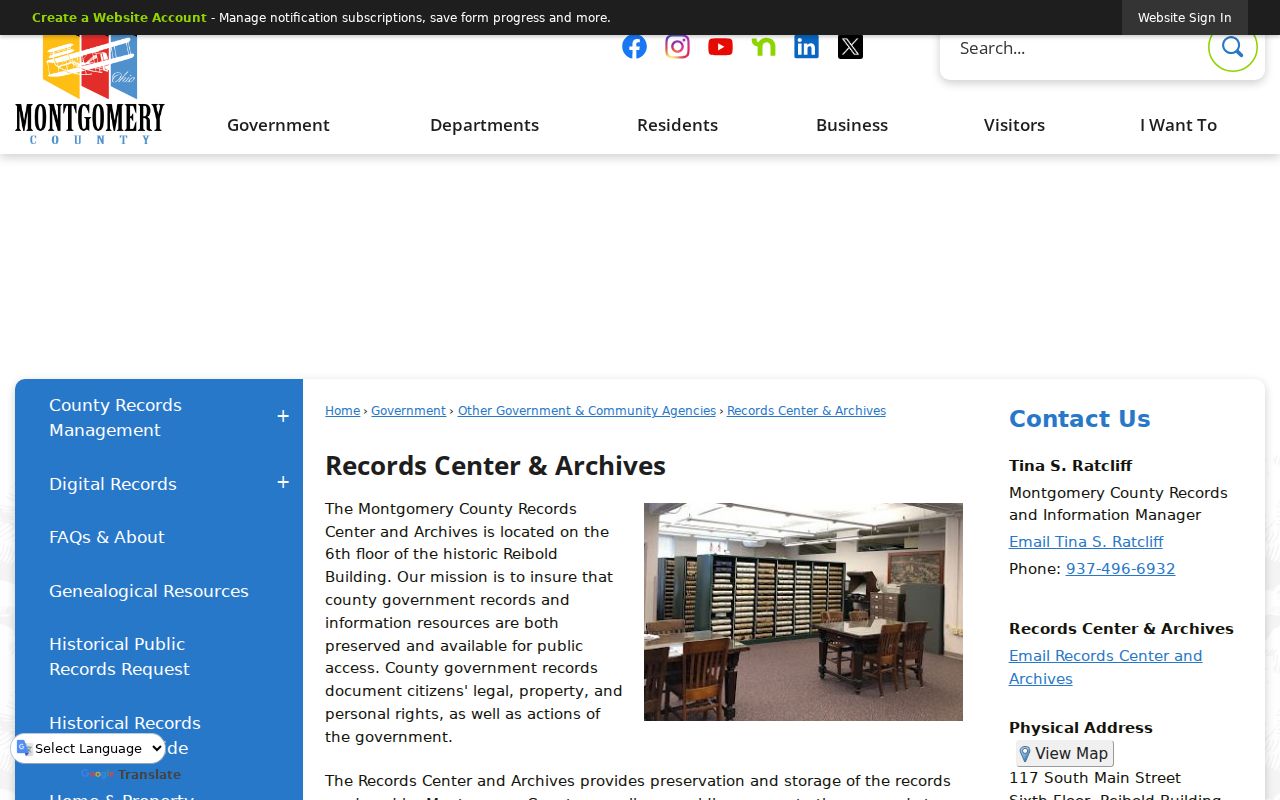
That physical route is part of the normal Dayton process, not a dead end. Older books, microfilm, tax duplicates, and staff retrieval often carry the exact link that a modern online search cannot display.
Dayton Recorder Records Change in 2025
The Recorder announced a fraud pre-check before the Auditor transfers a quitclaim deed on February 20, 2025. Its April 2025 newsletter reported 5,978 March records, including 1,568 deeds and 1,371 e-recordings. This is a current process note for a live deed chain. It does not alter the meaning of an older deed, establish a past household, or replace the need to follow the legal description through the recorded sequence.
The Recorder's Fraud Alert Notification enrollment page is the source for the related property-alert program.
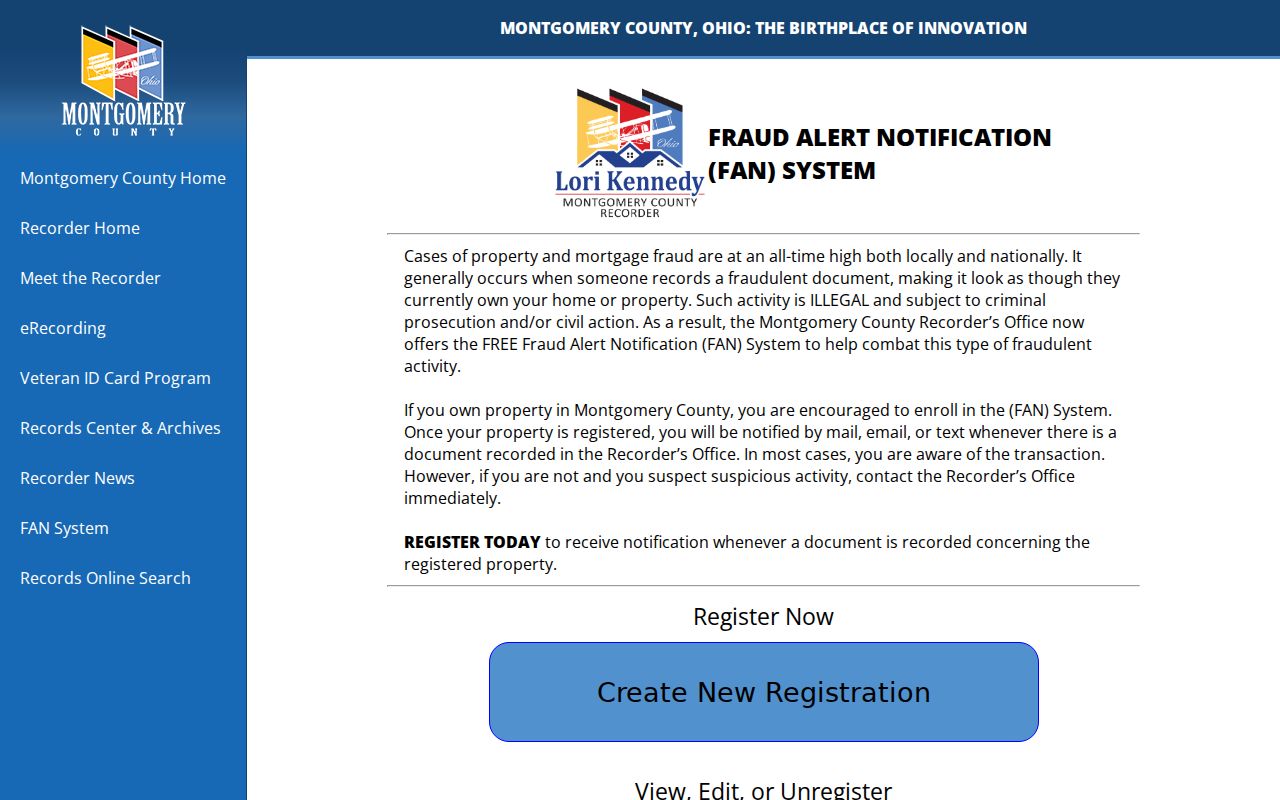
The alert is a modern notification tool. Keep it separate from historical chain-of-title research, which depends on recorded instruments and the archive's earlier indexes.